
Table of Contents
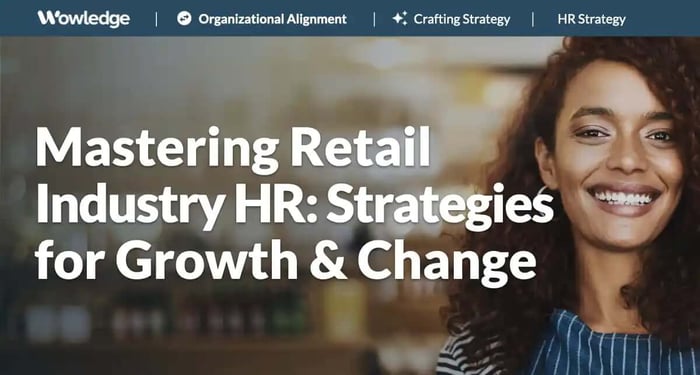
As a significant contributor to the U.S. economy, the retail industry garners considerable attention for delivering a total economic impact (direct, indirect, and induced) of over $5 trillion, or over 20% of the nation’s GDP. For many in public financial and government policy roles, as well as the general population, its status serves as a useful measure and harbinger of broader economic conditions, with rising and falling sales, prices, and consumer confidence reflecting those realities. In addition, the retail sector is a significant employer, with the Bureau of Labor Statistics (BLS) reporting that it accounts for 15.5 million workers (seasonally adjusted), with a combined direct and indirect impact on 55 million full- and part-time jobs (26% of all U.S. employment) when considering those in affiliated industry segments (e.g., supply chain). In that way, retail industry HR leaders and teams have a disproportionately high opportunity to impact the U.S. economy compared with those in many other industries.
Operating in often-sensitive and shifting economic, labor, and geographic markets presents retail industry HR leaders and their teams with substantial challenges that also offer a unique blend of opportunities. They reflect that they sell directly to individual consumers across six age groups/generations, each with distinct needs, requirements, experiences, expectations, and preferences. They include employing people across 5 of the 6 generations, each with its own unique blend of work-related skills, behaviors, and expectations. They require retail HR leaders to manage the human impact of consumer behavior changes and the industry’s rapid adoption of evolving technological environments and processes. And those business and talent challenges exist within the context of many longstanding issues that have vexed retail industry HR professionals for decades—high turnover, variable work schedules and hours, worker stress and burnout, low compensation, worker safety, and seasonal staffing surges.
Understanding today’s retail industry
Direct-to-consumer sales have evolved substantially from the days of the corner grocer, butcher, or clothier. Now millions do their shopping with retailers spread far and wide, ranging from mass merchandisers and online e-commerce stores to specialty “big-box” or warehouse stores. The types of retailers vary by factors including product nature or specialization, targeted price and value segment targeted, size and scale, location and proximity, and speed and convenience. Consider the range and types of retail outlets:
- Department stores and mass merchandisers (Macy's, Target, Kohl's, Walmart, Costco)
- Specialty Big Box (Home Depot, Lowe’s, Best Buy, IKEA)
- Motor vehicles (Ford, General Motors, BMW, Toyota, AutoNation, Penske, CarMax)
- Grocery (Albertson’s, Kroger, Aldi, Publix)
- Convenience (7-11, Circle K, Wawa)
- E-Tailer (Amazon, Apple, Wayfair, Etsy)
One significant change is the emergence of online shopping, which often precedes in-store shopping, with retailer websites used for research into product specifications, pricing, availability, and location, as well as evaluations or ratings from others who have purchased and used the products or services. As a result, many large retailers have adopted a hybrid approach, blending e-commerce with physical, “brick-and-mortar” locations. These are useful for purchases that require visual inspection, testing, expert explanation, and tailoring for fit or preference. The growth of digital retailing poses a challenge for retail industry HR teams as they hire, train, develop, and create performance and productivity support mechanisms for employees.
Despite the widespread use and general satisfaction with the convenience of at-home shopping, MIT Sloan reports that “physical retail” remains the primary source of retail income, accounting for between 80% and 83% of sales. The reason appears to be a combination of the shopping experience, the immediacy of purchase, and the ability to “touch, feel, and test” a product prior to purchase. Over 70% of retail sales are expected to remain in-store through 2030, supported by online reviews and comparisons. Retail industry HR leaders are taking note of the trends and planning their strategies and support accordingly.
Retail outlooks remain positive, and change is accelerating
Despite concerns about economic trends, including consumer price increases, retailer cost inflation (tariff costs), and rising unemployment, Deloitte reports that 96% of retail leaders are confident in revenue growth and 81% expect mostly modest increases in operating profit. However, while purchasing is strong in the upper-income brackets, lower- and middle-class households are viewed by experts as hit the hardest by consumer price increases.
A trend has emerged, causing concern among many retail industry HR leaders: the escalating closure of brick-and-mortar locations, with over 8100 retail locations closed, representing a 12% year-over-year increase. In fact, CNBC is reporting that as many as 15,000 retail locations will be closed annually in the coming years. The projection is that specialty retailers will lead the trend, while large, well-capitalized mass merchandisers are reporting plans to continue their expansions into new locations. As many of those large retailers focus on high-volume sales and discounted prices, this suggests a lower-to-middle-class focus that aligns with economic projections. Furthermore, by employing large numbers of workers, managers, and experts at the local, regional, and corporate levels, retail industry HR teams can expect that the labor market impacts of industry losses elsewhere will be blunted.
Further change is forthcoming, driven by improved insights from increased automation and advanced analytics. For example, Deloitte reports that 70% of retail leaders plan to expand their value-priced offerings and increase private label products to better meet customers’ price sensitivity. An increased reliance on digital capabilities is expected, as 46% expect to move towards shopping that integrates online, mobile, and in-store touchpoints, to build more personalization into the branding, marketing, and sales experiences. Between 25% and 35% of retailers are offering or developing AI-based product or service recommendation capabilities. These strategies represent an industry shift towards sales growth driven by greater customer engagement and alignment with their individual needs.
Such digitization is expanding rapidly, bringing the focus of retail industry HR professionals onto skill acquisition and development. Consider the widespread collection of point-of-purchase data, web and social media advertising insights, and radio-frequency identification (RFID) data for supply chain and inventory management. These advanced capabilities require skilled employees who can manage data, conduct analyses, and use the outputs to support merchandising, demand planning, stocking, and distribution across local, regional, and national markets.
And according to Deloitte, adapting the technological advances to the changing operational requirements calls for added expertise in fraud detection and cybersecurity, customer service chatbots, enhanced shopping personalization, and the adoption of agentic AI to automate mundane and repetitive processes.
Evaluating the challenges facing retail industry HR teams
With all the shifts in the ground beneath retail companies, it should come as no surprise that their HR teams are expected to be prepared to respond with meaningful solutions. When adding in the need to fulfill day-to-day operational requirements while planning and executing business-aligned strategic initiatives, the role of retail industry HR has never been more complex. The primary challenges:
Hiring and staffing
With an active workforce of almost 9.4 million people directly employed by retailers, maintaining the appropriate number of workers needed to staff stores, warehouses, and transportation routes is a critical driver of customer satisfaction and loyalty. Cost pressures (consumer, wholesale, and supply chain) are forcing retail industry HR teams to take a deeper dive into how they can support the business as it seeks to generate greater efficiencies to maintain margins, such as through staffing levels, costs of employment, physical footprint, productivity gains, and automation at scale.
The BLS reports 6.5 million open jobs, and that 96% of retail jobs are customer-facing, stockroom-related, or supervisory. With annual retail industry turnover estimated at 60% (and in the mid-70% range for part-timers), well over half of the staff at an average retail establishment must be replaced each year. Staffing, already a concern given the volumes required and retention issues, is exacerbated by labor market shortages and more restrictive immigration policies. And retail industry HR and recruiting teams are now facing additional pressure to source and hire appropriately skilled workers as the industry responds to supply chain pressures through onshoring, nearshoring, and diversifying their supplier base, amid rising wholesale costs.
Compensation and benefits
Related to staffing challenges are historically low market salary and wage levels, which make retail work less attractive to potential candidates. The average hourly wage in the U.S. is $26, but with an average of 30 hours per week, total earnings are lower. At the same time, access to welfare and retirement benefits is limited, with only 58% of retail employees having access to healthcare benefits (and 72% to paid sick leave), which may be driven in part by the ineligibility of part-time workers. While 78% have access to retirement benefit plans, only 41% choose to participate.
Retention
As we have seen, high levels of voluntary turnover represent an enormous and historically continuous trend. In fact, McKinsey reports that the industry (when combined with hospitality) experiences the highest level of turnover of any industry sector—44% higher than the next (professional and business services) and between two to five times (2X-5X) higher than any other. Frontline retail workers are 1.3 times more likely to quit their jobs than those in all the remaining sectors combined. And many report never wanting to return.
The reasons will sound familiar to retail industry HR professionals, but bear mention as a guide to counter-strategies and solutions. They include common complaints, including:
- Lack of schedule consistency and flexibility
- Low work autonomy
- Poor career development
- Stress, health, and well-being
- Low compensation
- Less meaningful work
- Non-supportive colleagues
- Uninspiring leadership
- Unsustainable workloads
Skills requirements and development
Retail industry HR teams are required to manage training and development requirements with some unique constraints—balancing needed learning and development with on-floor time requirements of the workers. The more time in training, the less available they are to help customers, drive sales, stock shelves, conduct inventory, and so on. HRBPs, HR managers, HR generalists, and training specialists are reliant on having, 1) the appropriate in-store technologies (and Wi-Fi bandwidth) to offer online training, 2) recruiters and hiring managers successfully source and select fully-skilled workers, and 3) central or regional training staffs to produce effective training content and programs from experts in L&D, product, health and safety, sales, customer service compliance, and fraud and theft prevention.
In addition to standard skill development (customer interactions, product knowledge, sales, POS systems, conflict management), retail industry HR functions are rapidly expanding their programming into digital co-work. This includes learning and skill proficiency enhancement related to storefront operations, such as leveraging systems that support intelligent merchandising, shipping, warehousing, stocking, etc. It also extends into technology-related topics such as cybersecurity, fraud detection, and advanced analytics development and interpretation.
Identifying solutions to retail industry HR challenges
Operating within a dynamic and challenging retail environment—whether brick-and-mortar or online—represents an exciting opportunity for creative, resourceful, and curious HR professionals. With the competition for hiring and retaining highly skilled performers so keen, and the race to win customers over with superior quality, cost-value, and shopping experiences, creating a highly business-contributing HR function can be a career differentiator. The solutions that address the retail industry’s unique challenges will differ in their combination from one company to the next, but they are all grounded in the fundamentals that research has demonstrated drive value and improvement year over year.
These cover most “stops” on the employee journey, from attraction to advancement.
1. Enhance candidate attraction and sourcing strategies
Making the organization stand out from all the others requires thoughtful consideration of what makes it a great place to work. Survey or interview long-tenured, high-performing employees in different functions, career fields, and job levels to understand what keeps them in place. Review industry benchmarks to identify policies, programs, and activity data that identify leading practices. Use both to develop an employee value proposition (EVP) for career marketing content, job postings, and interview discussions to attract workers at all levels, with messaging tailored to their unique needs and motivations. Consider improvements to the candidate experience (CX) that streamline and make the application, screening, interviewing, background checking, and hiring process steps easier and less stressful for potential new hires.
Research non-traditional sources of hires for corporate, regional, store, warehouse, and distribution-related roles. For example, respond to widespread layoffs occurring across industries with targeted recruiting and hiring campaigns, including technology and consulting/professional services, and customer service organizations. Look into industries with high dissatisfaction rates among high-value workers, such as banking and financial services (quantitative and customer skills), leisure and hospitality (working varying hours and schedules), or healthcare (responsive, handling stress).
2. Streamline HR processes
A key driver of employee engagement and retention is a focus on employee experience (EX), which is enhanced and implemented using HR process design methodologies. Establishing project teams to dissect and redesign simplified, efficient processes can create a work environment that managers and employees across the organization will not only appreciate but also applaud.
Prioritize process improvements that touch the most people and have the greatest impact on operational, financial, and business outcomes. For example, identify the “value chain” between an HR process and the outcomes it should impact, such as new-hire onboarding and training → speed to competency → replacement sales growth, or manager check-in meeting frequency → performance improvement → team customer satisfaction → customer purchase volume.
3. Improve management selection and development
With Gallup’s reporting that managers account for 70% of their direct reports’ engagement levels, making the appropriate investments in time, energy, and resources for their selection, oversight, and development is essential. In turn, engagement levels directly impact the customer experience and satisfaction, making these roles disproportionally impactful on retail outcomes. With lower barriers to entry for department or shift supervisor roles, younger and less-experienced employees are often promoted, making the quality of their selection and development even more critical.
McKinsey reports that 63% of frontline retail managers are thinking about quitting in the near future. Many of them have decided that they no longer want to work in retail. Given that, formal criteria, assessment techniques, and evaluation methods should be implemented to avoid rapid turnover and subsequent replacements who are identified “in a crunch.” Develop multi-level competency models that guide election, performance evaluation, development planning, and succession management from line supervisors up to corporate executive levels. Employ validated (psychologist-developed and statistically proven) selection assessments that can be used to identify high potentials and replacement candidates, and then augment those with performance data, and multi-rater (managers and executives) assessments of their management behaviors and adherence to the standards in the competency model.
4. Build meaningfulness into the work of employees
One of the most impactful ways to raise employees' engagement, performance, and productivity is to help them understand how their daily work contributes to the organization's broader outcomes. It is as simple as communicating and reminding individual workers and teams that their efforts underwrite the achievement of the organization’s mission and objectives, and support customers' goals. Making work meaningful is most often activated by managers when they coach a new hire (“Here’s how your work helps us generate revenue”, “Let’s have you take this goal, which directly supports our unit's profitability goal”, or “What the team accomplished helped our customers avoid the cost of pricey repairs”).
For retail industry HR teams, improving hiring and staffing can be shown to directly help the retailer win in a highly competitive industry by providing a superior customer experience and generating higher sales.
5. Establish more effective rewards, recognition, and well-being
With an acknowledgment that industry salaries and wages lag those of other industries, a retailer can make itself more attractive to candidates and employees despite tighter labor budgets through creativity and resourcefulness. While base and hourly pay rates are driven by market value, alternative reward approaches can help generate higher pay that is self-funded through improved financials. For example, just as sales incentives are funded by revenue levels achieved, individual and team bonuses can be generated by gainsharing—a sharing of additional profits or cost savings generated by employees through their contributions to improved operational efficiencies, productivity, or cost reductions.
Providing access to health, welfare, or retirement benefits has been shown to be a draw for some major retailers, with the added benefit that minimum eligibility scheduling requirements (20, 30, or 35 hours per week) provide a cushion for staffing needs at specific locations or time slots. With rising expectations (especially among Gen Z and Gen Alpha workers) for access to wellbeing programs, resources, and coaching, managing employee stress and burnout is essential. Create oversight by proactively using employee listening and analytics to detect impending issues, while supporting them with online resources and programs that support their physical, mental, and financial health and well-being. Burnout can be addressed by planned, regular job rotations from customer-facing into staff roles, or from management into strategic planning or development roles. Similarly, rotations of brick-and-mortar employees into e-commerce roles – customer analytics, merchandising, fulfillment, returns, or support can provide a needed break from the intensity of customer relations interactions.
6. Developing skills and capabilities
Training and upskilling employees in a retail environment is a continual challenge, given operating hours and schedules, staffing requirements, the geographic spread of units, and on-site technology barriers. However, adopting policies and allowances for paid, off-schedule class participation, providing guided learning and training during work hours, and on-the-job peer coaching and mentoring are common tactics. A related approach is through structured experiential learning that engages role mobility, structured shift work in other operations and environments (warehouse and distribution, merchandising, analytics and planning, or supply chain), and participation in targeted external industry events.
Relevant Practices & Tools
Emerging Workplace Wellness Practices for Culture and Brand Activation. >
Because of its importance to the broader community, “Wellness” can be integral to the organization’s brand. These aren’t only health-related brands... more »
Advanced Recruiting Strategy and Sourcing Practices to Increase Consistency, Speed, and Flexibility. >
Taking recruiting strategy and sourcing practices to the next level demands a reliable infrastructure, deep and highly productive relationships, and an analytics function that provides the organization with increased consistency, speed, and flexibility to access the right talent at the right time... more »
Creating a Culture of Internal Mobility that Supports Employee Development and Retention. >
Creating a culture of mobility requires management to accept that the benefits of movement (promotions and transfers) far outweigh the costs of replacing workers in their teams... more »
Adopting Lean Thinking as the Standard for Employee Experience Design to Increase Worker Productivity, Empowerment, and Engagement. >
Lean HR views the employee experience as a continuous value stream in which each interaction supports productivity, autonomy, and engagement... more »
The Employee Journey Mapping Worksheet: Map Experiences Across the Employee Lifecycle to Surface Testable Improvement Opportunities. >
The Employee Journey Mapping Worksheet is used to understand how employees experience key stages of their lifecycle and where HR services either support or hinder progress... more »