
Table of Contents
- Understanding how knowledge management meets industries’ current needs
- Knowledge Management’s value proposition
- The types of knowledge for KM to capture and share
- Knowledge management use cases
- Common issues and obstacles faced when implementing knowledge management
- Creating a robust, sustainable, and responsive knowledge management ecosystem
- Relevant Practices & Tools
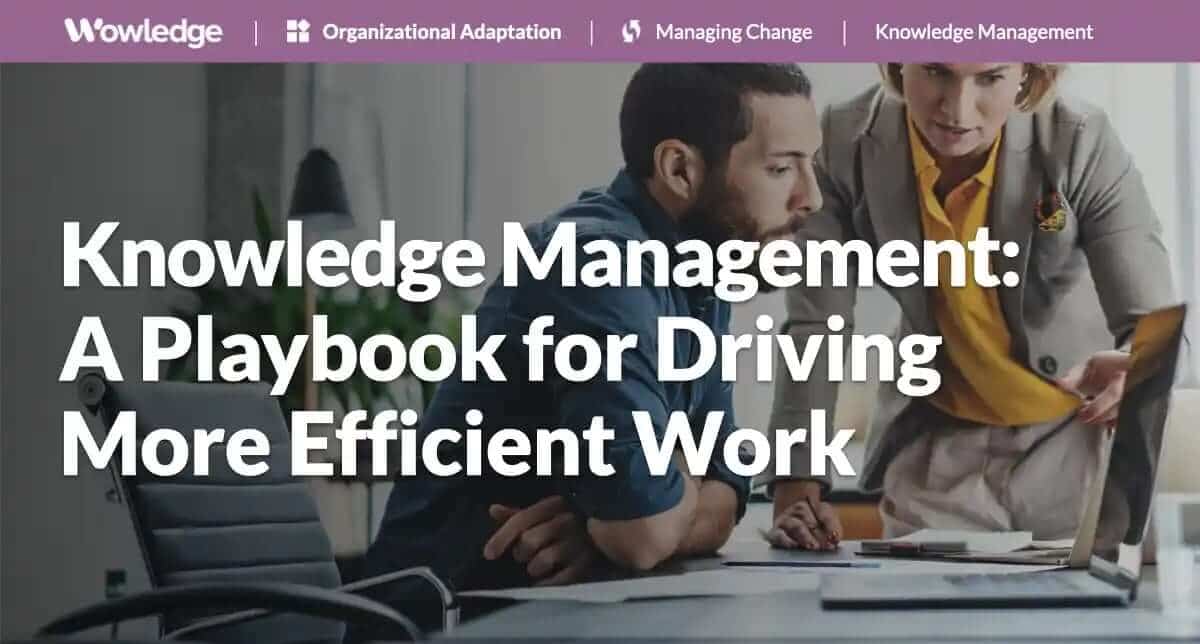
As a company matures, adds or subtracts employees, and transforms its work processes and methods, the expertise base needed to sustain that evolution will inevitably change. Keeping track of those changes and effectively sharing the adjustments or revisions with employees so they can do their work can be challenging. As a result, HR and operations leaders and their teams face an uphill battle to oversee the preservation, updating, and sharing of an organization’s expertise, otherwise known as “knowledge management.”
Knowledge management (KM) is defined by AQPC as “the systematic process of capturing, distributing, and effectively using an organization’s knowledge assets…to improve efficiency, innovation, and decision-making”. Its goal is to collect and organize information on essential work processes, methods, and lessons learned so that employees can easily access and use it to understand how to perform their tasks efficiently and avoid repeating others' errors. As will be seen, knowledge management is a critical element of employee learning, performance enhancement, and productivity improvement.
Understanding how knowledge management meets industries’ current needs
Technological advances, along with volatility in global labor markets, pose a significant challenge for companies as they work to sustain their technical, process, and customer expertise, as well as institutional knowledge. Consider, for example:
- Boomer and GenX retirements are draining industry and company expertise
- Layoffs are reducing the number of subject matter experts
- Voluntary turnover rates in the double digits
- Recent drops in entry-level hiring have led to fewer people who are learning from experts
- Workflows that are rapidly changing with new technologies that still require expertise in how things work, integrate, and interact.
- Job changes driving upskilling and reskilling that rebundle critical human-centric elements with both new and existing expertise from other jobs and functions
The need to retain hard-earned (and costly) lessons learned as jobs and people evolve is essential to maintaining operational efficiency and effectiveness, and knowledge management processes and systems are uniquely positioned to support this. Industry appears to understand this, as demand and the market for KM systems are growing at a healthy pace, with estimates of a compound annual growth rate (CAGR) of 15.2% in the U.S. (17.0% globally) from 2024 to 2031. Interestingly, small- to medium-sized businesses (SMBs) have embraced this more than their larger peers, with that segment reported to have the largest market share, likely in response to heightened sensitivity to the impact of key employee losses.
Knowledge Management’s value proposition
The business and talent value of capturing and sharing an organization’s collective knowledge and expertise is substantial. It enables the faster transfer of updated knowledge and expertise for employee learning and managerial decision-making. It broadens access to critical insights and experiences within and across teams. It supports the sharing and retention of legacy expertise and knowledge related to “how we do things,” “what we learned to improve them,” and “what works” in the company’s environment, climate, and culture.
Industry studies provide substantial evidence of its value, with IDC finding that 39% of businesses used KM to improve operational execution, time-to-market, decision-making, and innovation, and 35% reported heightened employee performance, productivity, and collaboration. While customer data (trouble tickets, purchasing insights) is the most commonly collected type, business and process documentation and data are close behind. Similarly, McKinsey reported that the use of internal social technologies supported a 20%-25% increase in productivity among high-skill knowledge workers and managers, as well as a 30-35% jump in information search and gathering, and 25-35% in communication and collaboration efficiency.
Other research estimates that F500 companies lose around $31 billion annually due to poor knowledge collection, documentation, and sharing among their workers. By improving access to information and tools, they can save about $2 million per month for every 4,000 employees.
The reasons organizations invest time, resources, and technology reveal the expected outcomes of knowledge management efforts. AQPC reported that they were seeking better operational efficiency, process performance, continuous learning, data-driven decision-making, and strategic integration. Those improvements were seen as pathways towards better customer experience, innovation, quality, organizational agility, and cost savings.

The types of knowledge for KM to capture and share
There are three types of knowledge that have been widely explained, accepted, and disseminated, and are important to understand, as the challenges associated with their capture, documentation, and/or sharing will differ. As a result, strategies and methods for managing and transferring each must be considered when designing and implementing KM plans. The three types of knowledge include:
Explicit
Formal and well-established knowledge related to work processes, methods, tool use, standards, and expectations. This can be easily documented, transmitted, and communicated via policies, SOPs, process maps, employee manuals, or training programs.
Implicit
Knowledge that is learned primarily via experience, the exercise of judgment, or experimentation. It is the application of explicit knowledge across different work situations and environments. It is harder to quantify and capture, and most often transferred through experiential means, or interpersonally, including collaboration and mentoring, project or effort post-mortems, or direct observation.
Tacit
This is knowledge that is attained through a combination of aptitude and experience. As a result, this is the most challenging to define and document. As it is based on uniquely personal capabilities and experiences, including creativity, leadership, and innovation, it is best transferred through coaching, mentoring, and storytelling.
Each of these points to the need for multiple ways to sustain knowledge management—not only through an automated system but also through informal or experiential learning and interpersonal collaboration.
Knowledge management use cases
The most crucial applications of knowledge management tend to focus on individual and team transformations and approaches to novel situations. These are used not only for employee transitions and problem-solving, but also for more efficient customer service and support. Consider situations such as:
- New hire or transfer onboarding. The need to quickly acclimate a worker to their new job requirements, procedures, tools/resources, and expectations, with the goal of achieving full role competency in a short time.
- Key employee turnover and restructurings. The need to document lessons learned, customer or partner/provider insights, and the status of work in progress helps ensure the continuation of efforts until a suitable replacement or transfer of responsibilities is in place.
- Merger or acquisition. Documentation of workflows, resources, available and necessary data, critical customer relationships and status, performance KPIs and reports/dashboards, and key employee insights support effective integration into existing operations and management structures.
- Process design and improvement. When embarking on process evaluation and redesign efforts, current workflow, RACI charts, KPIs, and feedback (employee experience, customer surveys, trouble tickets, etc.) provide an immediate starting point and time savings. These provide insights into what we are doing now, how well it is working, and what we can learn from the employees or customers who use them (e.g., their issues, workarounds, requests, and inquiries).
- Foster innovation and problem-solving. Employees facing novel challenges can leverage the experience of those who came before them or those who faced similar issues in other functions, departments, or types of operations. By documenting or otherwise sharing their approaches and outcomes, employees can provide ideas and inspiration for innovative solutions that can speed the resolution of future issues faced by their peers. KM serves as a valuable training resource for existing employees who need support in resolving issues more efficiently and quickly.
- Customer support. The most common application of knowledge management is a database that provides FAQs, supports automated responses (e.g., AI-generated text and chatbots), offers troubleshooting guidance and steps, and provides access to technical manuals and guides.
Common issues and obstacles faced when implementing knowledge management
When well-designed and executed, knowledge management is much like a living and breathing organism that requires constant oversight, feeding, and development. Unlike a parent, however, HR or operations teams do not take sole responsibility for their care and feeding – that is a shared responsibility among employees, managers, leaders, and IT teams.
Unclear ownership and accountabilities
KM represents an ecosystem of inputs (documents, videos, collaboration posts, coaching, mentoring), systems (estimated at 5 or more per company), and participants (individual contributors, subject matter experts, managers, leaders). As such, ownership of the entire universe of related capabilities is most frequently dispersed and lacks accountability standards. Similarly, organizations find it difficult to motivate employees to document and post their work and insights once completed, to incentivize peer coaching, guidance, and mentoring, and to generate sufficient participation on collaboration sites.
Aging content
The inclusion of the latest, most up-to-date information and insights useful to employees and teams is often lacking. While some content and assets are time-limited (e.g., documentation on a successful client project), others require regular updates as processes evolve, technologies mature, and applications proliferate. Enforcing requirements for teams to post project summaries, for experts to respond to questions on collaboration sites in a timely manner, and for employees to post accurate and complete information is one of the biggest single complaints.
Difficulty locating needed information
Despite significant technology investments, documents, data, insights, and experts are too often under- or improperly tagged in ways to support efficient and effective search and retrieval. In fact, CAKE.com reports that 47% of employees spend between 1 and 5 hours per day searching for needed information. This is likely due to the number of separate KM-related systems (e.g., document and content management, collaboration, shared databases, wikis, and employee directories) in use, poorly tagged or misspelled content, and suboptimized user interfaces (UX). As these systems are often external to those used in the flow of employee work, the effort required to access them can be a barrier to their timely use (e.g., as the question or issue arises).
Less time, effort, and priority
Research supports these observations and raises others that must be considered when contemplating upgrades to a KM strategy, system, process, culture, and related change management activities. The previously mentioned AQPC research found that among surveyed companies, the barriers to full and successful implementation identified include:
- 48% with overworked employees who lack the time to comply
- 43% find it hard to measure and justify the investment
- 39% whose leaders see it as less urgent
- 38% say that it represents too much change
- 35% report that their culture does not support the level of effort required
Despite the widespread implementation of knowledge management systems, IDC research indicates that only 45% of employees in large organizations actively use them.

Creating a robust, sustainable, and responsive knowledge management ecosystem
Much like any other company-wide initiative, building a KM capability requires planning, solid governance, well-integrated and accessible technologies, and cultural support for capturing and sharing lessons learned, work methods and techniques, and valuable insights and “tricks of the trade”. The activities associated with a comprehensive business- and values-aligned capability include:
1. Develop a strategy
Articulate a vision and clarify the purpose
An essential starting point is to identify the reasons and planned benefits of such an effort, which typically centers around centralizing, managing, and leveraging organizational knowledge with the end game of providing ready access to needed job information, generating greater workflow efficiencies, avoiding any “reinventing of the wheel” and errors from lessons already learned, preserving institutional knowledge, and driving innovation.
Build a business case
A business case establishes the cost-benefit of the investments needed to establish or enhance KM capabilities and to access the insights required. It defines the problem or issue to be solved, outlines the solution options, compares the alternatives and their ROIs, proposes the best-fit solution, details the implementation plan, specifies how success will be measured (financial, operational, and talent outcomes), and outlines a change management plan.
Define governance and security
Identify the executive champions, their role(s), and the committee structure and process for overseeing the development, content, and use of data across the platforms. Clarify the policies and procedures to be implemented to support operationally sound practices among employees, managers, and support teams. Identify the owners and their responsibilities and accountabilities for the assigned information sections of the platforms. Establish function-, role-, and level-based access and upload rules to secure sensitive business data and protect employees' and customers' personal information.
Establish the mechanisms for creation, collection, storage, and sharing
Define the existing and to-be-acquired or repurposed technologies to be leveraged in support of the knowledge management strategy. Consider the range of platforms and repositories to be used, and how they can be integrated to enable easy cross-system information blending and access. Identify the range of knowledge-sharing events (such as workshops, conferences, lunch-and-learns), group learning and development opportunities (bootcamps, hackathons, group coaching, webinars), and tech-enabled collaboration and connection platforms (communities of practice (CoPs), Ask The Expert message boards, expert locator directories).
Create standards and templates for collecting information
Develop format standards for different types of media that are suitable and can be readily uploaded to the digital platforms in use—including Word and PowerPoint documents, Excel spreadsheets, code or programming instructions, analytic methods and tools (e.g., R, SAS, SPSS, Python, Stata), weblinks, and videos. Create simplified templates for employees to use when posting work methods and techniques, project summaries (what, how, why, lessons learned), strategies, business cases, project plans, useful tools, research, and other resources.
Develop a change management plan
Strategic change management is an essential part of any large-scale transformation strategy, designed to maximize the speed and effectiveness of employee awareness, acceptance, and adoption. Communications, education and training, implementation support, and influential champions are core elements to be included.
2. Identify and map critical knowledge
Establishing a knowledge management ecosystem requires prioritizing the data, insights, and information worth collecting, saving, and sharing. A structured approach must be used to differentiate between information that is nice to have, or widely understood and transmitted, and that which is uniquely impactful on the quality, speed, efficiency, and effectiveness of the work performed. As a result, five types of information should be considered for capture and dissemination:
- Technical (novel, emerging, or advanced insights and methods)
- Process (workflow maps, responsibility assignment matrices (i.e., RACI), and SOPs)
- Industry-specific (addressing best practices, or those related to safety, regulatory requirements)
- Organizational (“how or why we do it here” knowledge, processes, behaviors, standards, or expectations)
- Relational (related to the interpersonal – customer profiles or purchasing preferences, and value-critical partner or supply-chain collaborations and expectations)
The value-add of such information is established by mapping the knowledge and expertise that directly impact organizational goals, are difficult to replace, and create risks if lost or not shared. A good starting point is conducting interviews, surveys, or focus groups with more senior contributors in different roles, as well as their managers, to determine which types of information should be captured and memorialized for others. Partner with leaders to identify their most seasoned and experienced experts, their unique insights into efficient and effective task performance, the shifts they are seeing in work processes, and the innovations they wish to spread.
3. Integrate technologies
The choice of technologies is often prioritized over the essential value of their effective integration. Given that companies average five or more KM-related systems and the emergence of new AI and machine-learning advances whose effectiveness is directly tied to access to multiple systems, this issue should be a top priority. The range of systems that are used includes:
- Document management systems for structured documents (e.g., SharePoint, Dropbox).
- Content management systems for creating, managing, and publishing both structured and unstructured content, web content, uploads of documents, and audio/video files (e.g., WordPress, Adobe, Squarespace).
- Collaboration platforms for communication, document sharing, internal directories, and project management (e.g., Slack, MS Teams).
- Wikis for internal, multi-user information uploads and editing, like Wikipedia (e.g., Confluence).
- Data warehouses and data lakes used to collect, integrate, and organize multi-source and multi-format information for mining and AI/machine learning analyses. These are used to consolidate data from multiple platforms for easier analysis.
The latest advances come from integrating AI into KM searches and workflows that make recommendations, identify potentially interesting documents, and, in general, support system “learning” to refine what any given individual seeks. These use chatbots and intelligent search agents to aggregate information from across internal sources and create a unique response to each query. AI is also a highly effective tool not only for finding information but also for creating new artifacts. Robotic process automation (RPA) & Agentic AI workflows are being used to validate and correct data errors, working alongside human workers to catch mistakes that could lead to suboptimal decision-making.
4. Establish content and interface update oversight and cadences
Improving the potential value of KM search and discovery comes from having the latest updates to information, insights, and expert locators. This requires a mix of data governance policies and practices and human oversight. Setting a standard schedule for content review (e.g., semi-annually or annually) to track the latest publication and update dates, and assigning ownership to the appropriate content experts, is a start. However, emerging applications of machine learning include automated auditing, tagging, flagging updates, and retiring outdated documents and resources.
Similarly, maturation of the KM process should always include a review of the user interface or “experience” (UX) to ensure that the content is easily accessed, found, and managed by individual employees. Design thinking offers a useful approach and methodology for gathering employee feedback and testing improvements in real time.
5. Measuring KM gains, outputs, value
The measurement of KM activity, utility, and user feedback should be established to assess its ongoing ability to deliver on its value proposition. During the implementation and change management phase, tracking employee usage volumes and frequency, along with a brief (2-3-question) survey embedded in the platform, can help identify acceptance, adoption, and utility (search accuracy and usefulness). Once established, KPIs should be aligned with usage and relevance, individual or team performance improvements, and search query analyses to identify gaps in KM, learning content, or skill development requirements.

Relevant Practices & Tools
Advanced HR Practices that Accelerate the New Digital Reality. >
An intense focus on the future of work in a digital organization is critical to the value realization of digital transformation. Investments in technology, process re-engineering, and data management all rely on individuals in the organization to manage the business effectively... more »
Building a Culture of Problem-solving and Continuous Improvement. >
At the heart of Lean is the belief that every employee, regardless of role or level, has the potential to contribute to making their work efforts and outputs better... more »
Building a Culture of Coaching and Mentoring that Creates a Continuous Learning and Improvement Environment. >
Establishing and managing a sustainable culture of coaching and mentoring is an integrated effort that builds an environment where continuous development and growth take center stage... more »
Deploying Technology to Enhance Learning Delivery and Management Efficacies. >
Creating, managing, delivering, and curating learning content at scale typically requires technology solutions... more »
The Digital Transformation Initiative Catalogue: Document, Sequence, and Analyze Identified Initiatives of a Digital Transformation. >
This template provides the structure to document initiatives HR identifies as part of the organization’s digital transformation... more »