
Table of Contents
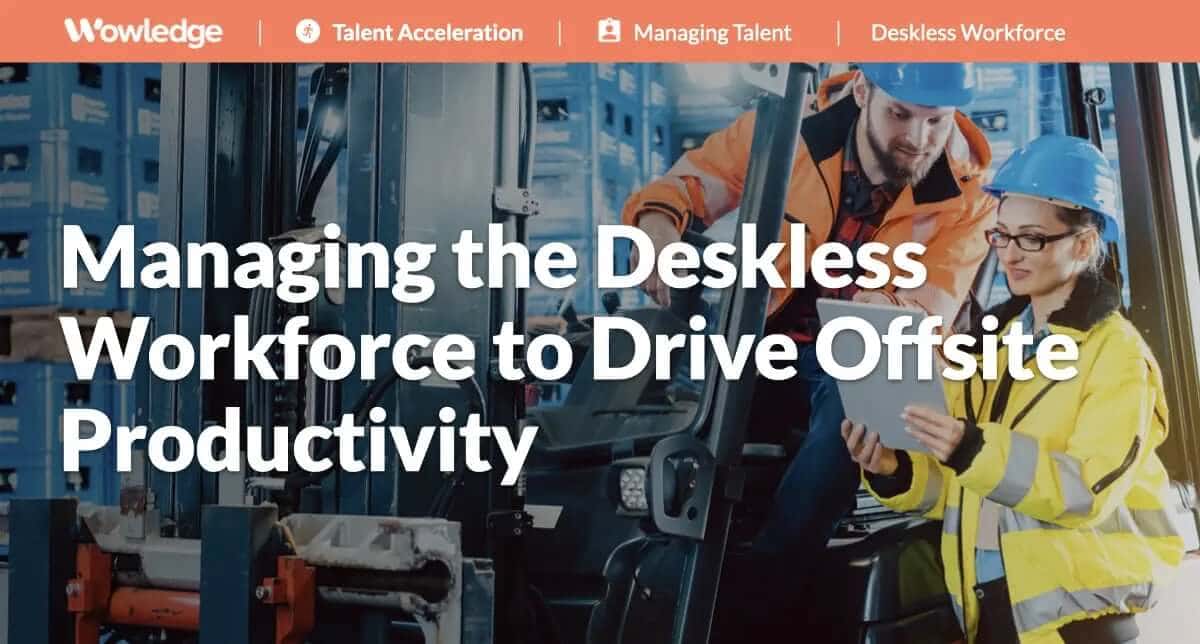
Across various industries and sectors, navigating the unique mix of business and HR challenges, priorities, and best-practice solutions requires constant adaptation. One set of management issues that crosses multiple industry lines and is surprisingly widespread comes from employing the “deskless workforce.”
Deskless workers are those whose roles and responsibilities are conducted away from a fixed desk, office, or cubicle, unlike traditional white-collar jobs. According to the Boston Consulting Group, these employees make up between 70-80% of the global workforce, comprising an estimated 2.7 billion workers. Because of their physical locations, they face significant challenges that require unique, tailored management and HR processes, practices, programs, and platforms. Data show that 53% experience job burnout, 43% are considered high-turnover risks (33% greater), and, as a result, are 15% less productive. HR is uniquely positioned to develop solutions that impact critical business and operational outcomes.
Understanding the deskless workforce
A deskless workforce comprises employees whose work is performed outside the relative comfort of a fixed office setting, without the conveniences (for them and their employers) available to typical office-based peers. They perform their jobs in the field, at customer or partner sites, on manufacturing or distribution center floors, in trucks, planes, ships, or railcars. Their roles are uniquely defined by job requirements, work environments, and limited access to the tools and resources available to office-based peers. The key characteristics of these jobs that make managing and supporting them challenging and oftentimes difficult include:
- Geographic distance and dispersion. Employees perform their jobs away from centralized management and support, often as individuals or small teams, separated from teammates and other employees. These roles may require significant travel and time away from home, family, and social networks.
- Irregular schedules. Jobs in this space can involve changing workdays and non-standard (e.g., 9-5) shift hours, creating pressure to meet personal, family, and other non-work obligations.
- Limited access to direct supervision or escalation. Deskless workers may work without immediate access to others for questions, guidance, feedback, support, or coaching. This independence can risk operational consistency and output quality.
- Public and customer-facing task responsibilities. Many of these roles (e.g., customer sales, service, and support) involve tasks that require a mix of soft and technical skills to perform successfully and completely while protecting and advancing the company's reputation.
- Limitations on time and access to tools and supporting technologies. Field and non-corporate work locations often have poor digital and internet connectivity, and lack the space and equipment to support administrative needs. The nature and scheduling of the jobs themselves can limit the ability of the staff(s) to participate in company-sponsored activities.
- Physically demanding work. Jobs are performed in outdoor, remote, repetitive, difficult, or even dangerous conditions and often involve highly skilled manual tasks that require dexterity and endurance. Physically repetitive activities are common and tax many workers' physical capabilities over the years.
- Individual pressures and wellbeing challenges. Many deskless workforce roles offer modest or variable earnings (e.g., sales), and when combined with travel, commuting, shift schedules, and difficult or dangerous work environments or conditions, they can create issues with employee wellness and wellbeing.
Primary industries employing the deskless workforce
The range of industries and types of organizations with deskless employees is substantial, and for many, an underappreciated part of the global workforce. While a few may come to mind, consider workers beyond the manual or unskilled laborers, including skilled tradespeople, certified technicians and specialists, and even degreed professionals.
- Manufacturing
- Construction
- Healthcare
- Energy and mining
- Retail
- Hospitality and tourism (restaurants, food service, cruise lines, railroads, airlines)
- Public sector (police, fire, military)
- Transportation (trucking, ocean, rail, air freight), warehousing, and distribution
- Agriculture, forestry, and landscaping
Others include the information and telecommunications, professional services, and education sectors, which can also be considered major employers of the deskless workforce.

Common management and operational challenges
Employing a deskless workforce brings challenges that are unique and/or amplified compared with managing onsite teams. Effective people management is difficult enough when leaders and managers are co-located with their teams, but when physically separated, the challenges multiply. Consider these primary examples of issues facing management and HR teams:
Performance oversight and monitoring
Managing a deskless workforce requires the same elements as managing an on-site workforce: setting performance goals, ensuring task and behavior standards are met, and developing and coaching for growth and improvement. Monitoring the quality, timeliness, and quantity of work, productivity, and consistency across individuals and dispersed teams without direct observation or regular (e.g., drop-in) conversations makes objective assessment and guidance difficult. Employees and managers report that the “out-of-sight, out-of-mind” phenomenon is real and increases the risk of failing to achieve organizational objectives.
Talent scheduling and deployment
Companies that employ deskless workers understand that independent work, irregular schedules, changing work locations, shift-based work, and rotating schedules create unique challenges. Particularly when labor shortages and high turnover exist (e.g., nurses, truck drivers, security officers, or maintenance staff), maintaining sufficiently staffed teams with properly skilled workers across geographically dispersed or remote locations, within the needed schedule timeframes, can be a constant battle.
Properly skilled and knowledgeable workers
The challenge of deploying the right people, with the right skills and experience levels, with the appropriate knowledge and expertise in the targeted location or operation represents a calculus-level math problem. The problem is not as simple as “We need an electrician to troubleshoot site problems in an electrical substation in [a remote desert location]’. The need is ready access to information about each worker’s skills, proficiency levels, operational/environmental expertise, equipment/system age and model knowledge, home location, etc., so they can be assigned and deployed appropriately. At the same time, these workers, with widely varying levels of digital skills and fluency, must know how to effectively use and operate administrative and technical technologies as part of their job responsibilities.
Technology access and use
Properly trained and skilled technology users are only part of the equation, as many deskless workforce employees lack the resources and information needed to perform their tasks effectively and efficiently. While the most common issue is reliable internet access in offsite or remote locations, well over half of these workers lack company-provided technology to access and use the required systems. Listo.com reports that while 75% use technology to perform their work, 56% must use their own phones, tablets, and/or laptops. Many organizations can't track schedules, locations, and work progress, while employees may struggle with limited or poor access to service equipment specifications, service history, or troubleshooting support.
Time away during scheduled work hours
A consistent issue for the deskless workforce is having the ability and authority to step away from job tasks for other necessary activities, especially during customer-facing work or when facing unexpected environmental issues and delays. It is difficult to provide adequate time for learning and skill development, reviewing company or team communications, completing and submitting reports, meeting with supervisors for feedback and coaching, or working with subject matter experts to understand and resolve immediate work issues. Scheduling time away from tasks is more challenging for them.
Common talent and HR challenges
Most deskless workforce issues facing HR teams flow directly from those faced by business leaders and connect to achieving larger business, financial, and operational outcomes. Many of these relate to the availability, accessibility, and effectiveness of technologies that enable remote communication and collaboration (synchronous and asynchronous), work and HR process automation, and educational and task-support platforms. Others relate directly to the human elements of deskless work that make it harder to connect with the organization’s mission, objectives, and culture. These include:
Employee training and development
The deskless workforce lacks the advantage of having a set workplace and computer with high-speed internet/intranet access to job-related learning objects, programs, and pathways. Their ability to onboard, access knowledge management resources, identify skills gaps, register for and take courses, and collaborate with peers and experts relies on the availability of those resources via mobile technologies. As a result, their access to current, up-to-date information on work processes and approaches, evolving standards and regulations (professional, local, regional, national), emerging methods, and the skills associated with them can be limited.
59% of surveyed workers report that the majority of their training is delivered online. However, developing the range of skills needed in these jobs that require greater independence and decision-making, particularly the “soft skills” (e.g., sales, interpersonal, managerial) and those related to self-reliant problem-solving, is often best developed with live, learn-try-feedback-repeat cycles. At the same time, while much regulatory (e.g., safety, security) training can be learned effectively in interactive, self-paced learning modules, only 6% of the deskless workforce said they received most of their training on a mobile device. More concerning, research found that only 17% of these workers retain 50% (or less) of their training immediately after completing it.
Career development
Employees who work in remote sites often lack exposure to the leaders and managers who make career advancement decisions. Without a larger contingent of leaders who can see their work, understand their strengths, get to know them, and select them for new responsibilities, jobs, and/or experiential learning assignments, their careers often are stalled. The deskless workforce must also expend significantly more effort to build and maintain networks of subject matter experts, mentors, and peers who can expose them to innovative thinking, new career paths, and job opportunities.
The remoteness also leads to ATD’s observation that 68% of the deskless workforce do not have career goals or understand the steps necessary to advance their careers. 25% of them are demotivated by that and are turnover risks as a result.
Communications
The connection between an employee’s work and the company’s purpose, vision, strategies, and objectives directly affects their sense of purpose, value, and the “meaningfulness” of the jobs they perform. That, in turn, directly (and significantly) impacts talent outcomes, including employee engagement, productivity, motivation, innovation, and retention.
The difficulties in communicating with deskless workers are substantial, as ATD reports that 40% of them experience “fractured”, or inconsistent, incomplete, or missing communications that negatively impact their daily work. The same percentage say they do not receive robust, ongoing feedback essential to continuously improving their work output and business contributions. This negatively impacts their understanding of their company’s and team’s mission, direction, objectives, and priorities. That, in turn, leaves them without guidance on the standards and how best to apply, act on, and contribute to meeting those business needs.
Engagement and cultural assimilation
Remote or deskless work can be isolating, making it harder to stay connected and receive the guidance needed through coaching, mentoring, development, and technical support. Challenges abound around employee enculturation, onboarding, establishing and maintaining social connections, and building effective relationships with direct supervisors/managers and teammates. These are crucial elements of the employee engagement equation, which typically suffers in a deskless workforce.
Many deskless employees interact with customers and suppliers/partners, and any lack of knowledge or alignment with the company values and behavioral expectations can lead to customer dissatisfaction. They need to make decisions without ready, on-demand access to the right information and support needed to triage, resolve issues, or generate the right solutions efficiently.
Employee wellbeing
Remote, deskless employees work away from the home base without the local support and conveniences that their onsite colleagues enjoy. Changing work schedules and locations, different and difficult environmental conditions, travel, and few to no backups to cover their work requirements—these all create stressors that affect the safety and well-being of the deskless workforce. In fact, Quinyx reports that almost 75% of these employees go to work while ill for fear of reduced wages or job loss. At the same time, the deskless workforce has been observed to experience significantly lower financial wellness, with almost 44% reporting “high or overwhelming financial stress.” Surprisingly, and of equal concern, is the finding that “financial worry” was a stronger predictor of preventable accidents than fatigue or tenure in a study of over one thousand truck drivers.

Solutions for managing the challenges of employing the deskless workforce
1. Prioritize the needs of deskless workers
Although many of these roles are often viewed and treated as less strategic, elevate them as customer-, partner-, and public-facing ambassadors. Consider how John Boudreau of USC famously identified street sweepers at Disney as the “pivotal,” or most critical, workforce segment that has a disproportionate impact on theme park patrons’ experience. Focus on engaging, retaining, encouraging, and differentiating their employee experience (EX) by investing in the approaches, tools, development, and support they need to deliver maximized business value.
2. Reconsider organization and job design
Reconsider management and field employee staffing structures to replicate the oversight, coaching, and social arrangements that onsite employees experience on a smaller and affordable scale. Design localized non-managerial “lead” roles staffed by more experienced and skilled subject matter experts who can meet them, provide on-demand technical guidance and development, act as peer mentors, performance coaches, and team leaders. Empower and structure self-directed work teams that are guided by clear standards and performance expectations, but operate without traditional managers.
At the same time, consider job redesign for individual contributor roles to expand discretion and decision-making authority, along with comparable increases in skill and capability requirements to support hiring and advancement standards. Structure this with multiple levels of worker capabilities, such as those used in the skilled trades (e.g., apprentice, journeyperson, master/SME), to strengthen the ability to deploy the right mix of skills and proficiencies as deskless workforce team makeup solutions.
3. Tailor training and development delivery
Blended learning remains the standard for skill and career development and should be leveraged as much as practical for the distributed/deskless workforce. Create opportunities for interactive learning through virtual training and social learning sessions, and regularly scheduled local, regional, or national group development that brings these workers together for in-person, interactive, hands-on skill development.
Mix education (online, virtual) with exposure (skip-level sessions with higher management, virtual group coaching) and experience (job rotations, cross-functional project teams) to maximize workers' knowledge retention, skill acquisition, and proficiency growth. Establish communities of practice and expertise, leveraging technologies that use collaboration, social learning, and regular access to experts to support continuous growth and network building that enable cross-fertilization of new and improved methods and innovation.
4. Expand the use and availability of technology and tools
While many industries rely on advanced technologies for their drivers (GPS mapping and tracking), field technicians (mobile-first technologies), and warehousing workers (IoT sensors), combined research on employee tech deployment signals a need for broader use. Cloud-based platforms bring myriad opportunities to support deskless workers with knowledge support, wellbeing monitoring, work and administrative process automation, and intelligent guidance and coaching.
Tech-based solutions such as augmented reality (AR) glasses and goggles are being deployed effectively for training, as well as for diagnosing and repairing mechanical systems and medical/physical maladies. Smartphones and tablets can provide ready access to on-demand documentation and (AI or live) expert advice. Mobile solutions enable remote performance feedback, coaching, support, and safety or productivity prompts and alerts. Mobile-optimized HR apps that automate and present pay stubs, travel reimbursements, work schedules, time-off requests, benefits enrollments, employee announcements, and employee pulse surveys make access and use more convenient.
Offering dedicated, company-provided mobile equipment, such as phones, tablets, laptops, watches, and IoT badges, supports more robust cybersecurity policy adherence and implementation. It also enables better oversight of employee wellness by monitoring external environmental and personal health conditions, as well as process/work inefficiencies that can be used in coaching and development (much like GPS was used to optimize delivery drivers’ routing and directions).
5. Optimize talent management for offsite workers
Tailor talent management processes to be more responsive to the needs and operational realities of the deskless workforce and their managers. For example, update hiring standards to evaluate such traits as trustworthiness, values alignment, emotional maturity, and self-reliance when hiring workers who will operate with relative independence from their supervisors. Make career mobility and development a continuous process through employee evaluations, group talent calibration sessions, job rotations, and skills-based assessments and tracking. Make mobility for talent development and greater scheduling and deployment flexibility a cultural marker by creating policies and managerial guidance that support it. Consider implementing a talent marketplace that helps workers identify career tracks, associated skill development opportunities, and development pathways, and empowers them to control their career options.
Tailor recognition and rewards programs that address the unique aspects of the deskless workforce environment with safety and hazard pay and bonuses, manager- and peer-based recognition platforms, and team performance bonuses that build a sense of belonging, value, and cultural pride. Implement structured financial wellness programs and resources that help them expand their knowledge, access expert guidance to manage savings and debt, and provide for themselves and their families.
Ensure quality performance management through weekly coaching and feedback, supported by automated tracking and audit trails of interactions with management, development needs and recommendations, and goal assignments for performance and career development. Require that managerial goals, performance standards, and reviews include the frequency and effectiveness of coaching and guidance of their deskless workers as critical criteria for merit increases, bonuses, and advancement.
Tailor onboarding, communications, enculturation, and belonging to their unique needs and circumstances. Make onboarding welcoming and educational, with streamlined processes that enable a focus on building a sense of community membership and pride. Provide daily “pop-up” reminders and messages to keep employees up to date on corporate strategies and successes; leverage team collaboration platforms for messaging, file-sharing, and ongoing support; and share local or segment updates by location, role, or shift so information stays relevant. Make proactive employee listening efforts that resonate with these field workers through targeted pulse surveys, brief online/interactive group sessions, and skip-level (next-level manager or higher executive) virtual sessions that educate and allow for Q&A.

Relevant Practices & Tools
Developing a Winning Talent Strategy to Identify Key Capabilities and the Most Appropriate Workforce Mix. >
A talent strategy defines the talent needs and associated objectives necessary to meet top business goals. It is both an integral part of the HR strategic plan and a direct informer of the talent management strategy and planning process... more »
Identifying and Calibrating Successors and HIPOs for Each Role Through Structured and Standardized Assessment Sessions. >
Naming potential successors for executive and critical roles is a collaboration between leaders that requires thought, preparation, and discussions... more »
Aligning the Wellness Approach with the HR Strategy to Secure Business Relevance and Talent Objectives. >
Any employee wellness approach should align with the overarching HR strategy, including team goals and vision... more »
Engaging Employees to Co-create Wellness Solutions that Increase Engagement and Promote Enduring Practices. >
Traditionally, the decision of what wellness programs to offer employees comes from behind the closed doors of the HR function, often sitting with a benefits manager... more »
The HR Strategy Alignment Worksheet: Identify Wellness Initiatives Alignment with Broader HR Strategic Objectives. >
This tool provides a structured approach to evaluate how employee wellness supports the HR function's mission, goals, and objectives... more »